
Defend a whole-course inference with source, timing and validation intact
A final report should preserve what was observed, what was assumed and what remains unestablished. Microbial mechanisms can make an explanation plausible, but evidence must still distinguish it from measurement, selection and timing alternatives. This destination connects host/population interpretation to control specificity and the earlier source/measurement modules.
Learning outcome: Reconstruct both contingency expectations, separate mixture from observation changes and retain a competing causal explanation. Complete the retained full-course evidence stages without treating public solutions, actual source labels or an automated status as independent mastery.
Starting recap
Defend a source-aware whole-course inference with distinct observation, genetic, metabolic, host and control boundaries; preserve actual source actions, first reasoning and unmet independent/practical gates.
All lessons are open directly. Your saved experiments remain when you leave and return.
Try
First true fraction 0.25 gives classified-positive fraction 0.8×0.25+0.1×0.75=0.275. At h=0.8, s=0.8, second true mixture fraction 0.34 gives 0.8×0.34+0.2×0.66=0.404. The apparent change 0.129 contains mixture and measurement contributions; applying first measurement properties to the second mixture gives 0.338, and half/half true-state standardized change is zero.
Open the experimentPredict
Could an apparent improvement or deterioration arise with every within-stratum true frequency unchanged?
Experiment
Reconstruct both contingency expectations, separate mixture from observation changes and retain a competing causal explanation. Complete the retained full-course evidence stages without treating public solutions, actual source labels or an automated status as independent mastery.
Separate composition and classification from apparent change
Worked teaching model · synthetic values · Original state frequencies low 0.1/high 0.4 unchanged between records. First record half/half, sensitivity 0.8, specificity 0.9; second changes mixture and specificity only, sensitivity 0.8. Positive fractions are expected classified records, not real clinical tests or intervention outcomes.
Reset keeps your prediction, captures and practice history.
An apparent change can arise entirely from composition and measurement even when each underlying stratum state frequency is unchanged.
Original state frequencies low 0.1/high 0.4 unchanged between records. First record half/half, sensitivity 0.8, specificity 0.9; second changes mixture and specificity only, sensitivity 0.8. Positive fractions are expected classified records, not real clinical tests or intervention outcomes.
| Quantity | Value | Unit |
|---|---|---|
| First true state fraction | 0.2500000 | fraction |
| Second true mixture fraction | 0.3400000 | fraction |
| First classified-positive fraction | 0.2750000 | fraction |
| Second classified-positive fraction | 0.4040000 | fraction |
| Apparent positive-fraction change | 0.1290000 | fraction |
| Second fraction under first measurement properties | 0.3380000 | fraction |
| Half/half true-state standardized change | 0 | fraction |
| Within-low true-state change | 0 | fraction |
| Within-high true-state change | 0 | fraction |
These fictional records do not supply actual organisms, clinical observations, biological procedures or completed learner evidence. The separate source-labeled micrographs retain their own provenance and limitations.
An apparent change can arise entirely from composition and measurement even when each underlying stratum state frequency is unchanged.
Original state frequencies low 0.1/high 0.4 unchanged between records. First record half/half, sensitivity 0.8, specificity 0.9; second changes mixture and specificity only, sensitivity 0.8. Positive fractions are expected classified records, not real clinical tests or intervention outcomes.
Captures preserve recipes and replay their calculated results. They are synthetic model evidence, not physical measurements.
Understand
Connect the whole-course evidence
A final report should preserve what was observed, what was assumed and what remains unestablished. Microbial mechanisms can make an explanation plausible, but evidence must still distinguish it from measurement, selection and timing alternatives. This destination connects host/population interpretation to control specificity and the earlier source/measurement modules.
The original two-record comparison holds true low/high-stratum state frequencies at 0.1/0.4. The first record uses half/half strata, sensitivity 0.8 and specificity 0.9. The second changes the high-stratum fraction h and specificity s while keeping sensitivity and both true stratum frequencies unchanged. Expected positive fraction is 0.8p+(1−s)(1−p), where p is the mixture’s true fraction. No actual test, disease, patient or intervention is supplied.
A changed positive fraction can therefore arise from a changed mixture, a changed observation process or both. Re-expressing the second record under the first measurement properties separates one contribution; standardizing the true strata to half/half shows no underlying within-stratum change in this packet. These transformations audit declared assumptions but would not automatically remove unmeasured confounding from real data.
The whole-course project requires an original plan, an actual licensed image audit, a reproducible supplied-record analysis across all six modules, an unchanged first report, substantive human critique, justified revision and an unfamiliar first response with feedback exposure retained. Synthetic practice is not a substitute for actual microscopy source use, and submitted prose is not automatically verified reasoning. Physical laboratory competence, clinical authority, independent learner performance and institutional credit remain separate gates.
Reconstruct separate boundaries
First true fraction 0.25 gives classified-positive fraction 0.8×0.25+0.1×0.75=0.275. At h=0.8, s=0.8, second true mixture fraction 0.34 gives 0.8×0.34+0.2×0.66=0.404. The apparent change 0.129 contains mixture and measurement contributions; applying first measurement properties to the second mixture gives 0.338, and half/half true-state standardized change is zero.
Predict and investigate
Predict first: Could an apparent improvement or deterioration arise with every within-stratum true frequency unchanged?
Reconstruct both contingency expectations, separate mixture from observation changes and retain a competing causal explanation. Complete the retained full-course evidence stages without treating public solutions, actual source labels or an automated status as independent mastery.
Defend a changed case
Apply the mechanism to a changed boundary
Use second high-stratum fraction 0.2 and specificity 1. Find its true mixture fraction, observed positive fraction and change from the first record.
Retain the first response, units, uncertainty and any prior feedback exposure in the notebook before comparing this public explanation.
Compare a worked response
True mixture fraction 0.1+0.3×0.2=0.16. With no false positives in this fictional setting, observed positives 0.8×0.16=0.128, a change−0.147 from 0.275. Both true stratum frequencies still remain unchanged; this is not evidence of a real treatment benefit.
Actual source audit, not synthetic substitution
Actual images: provenance is not independent identification
Inspect visible features, record an alternative and identify what remains unresolved. Source names and descriptions below are disclosed guided information; preserve that exposure. Neither image supplies an embedded calibrated size for these exercises.
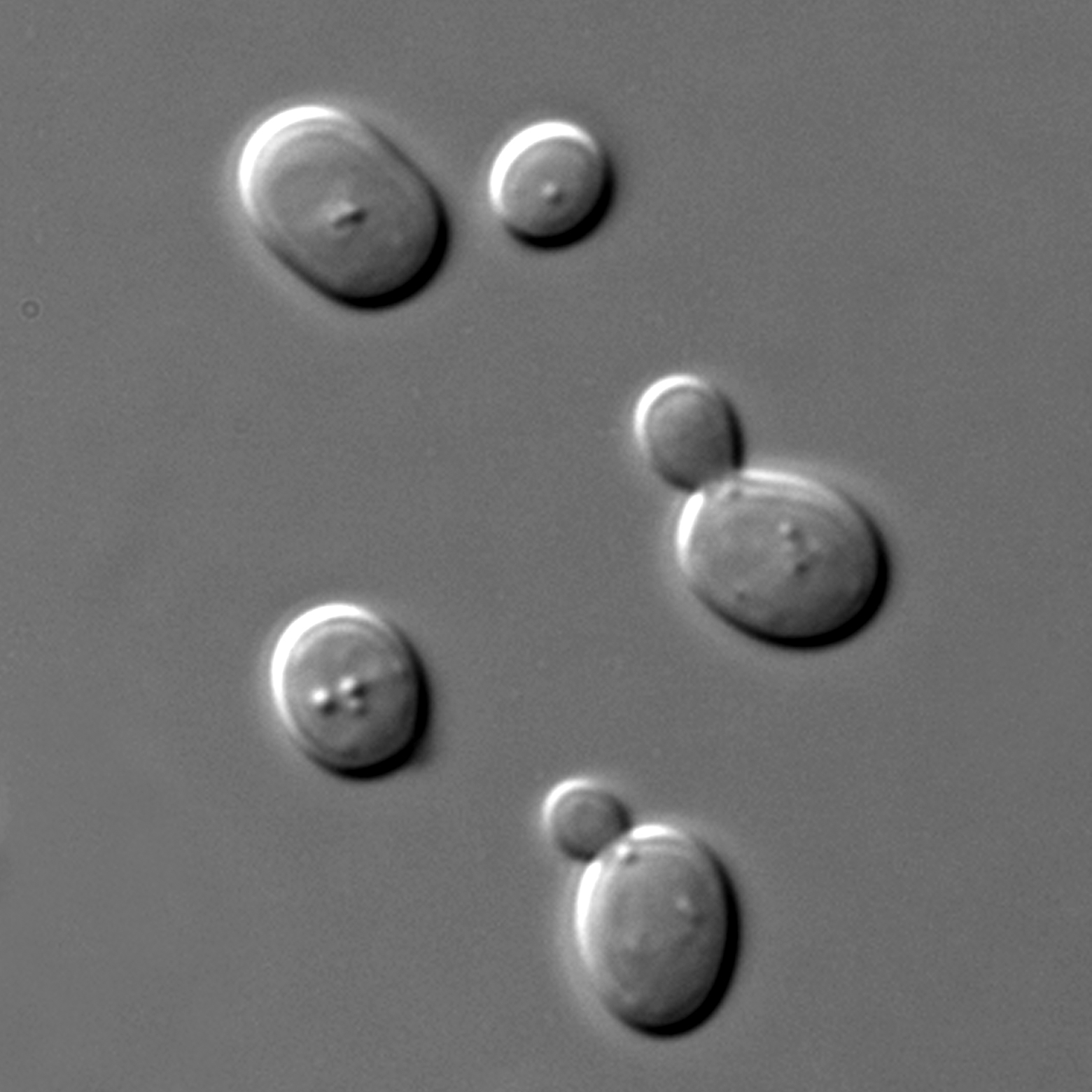
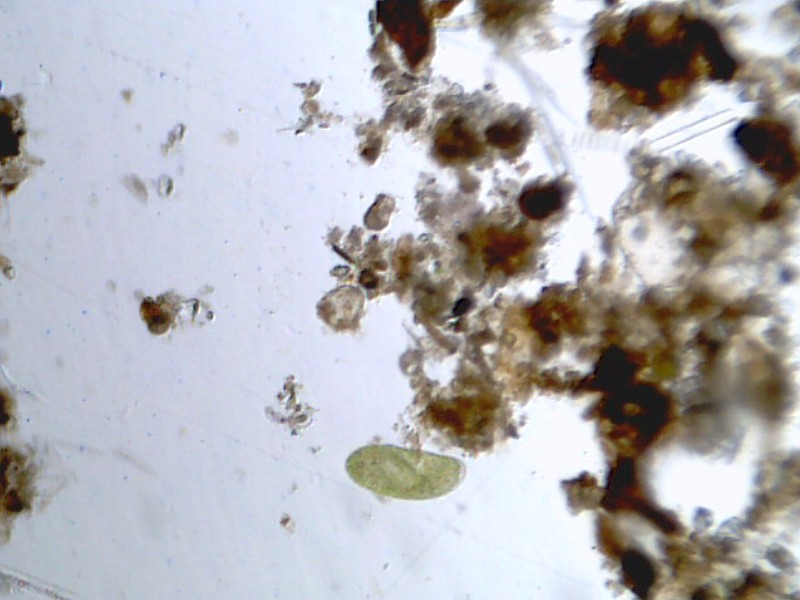
Download image provenance, source links and SHA-256 hashes. The original source files can be opened separately; no collection, culturing or unknown-organism handling is needed.
Retain the evidence chain
Complete the versioned Microbiology evidence workspace stages with original plans, source/version/reuse, first reports and actual human critique. Prior category projects remain archived. No physical culture, clinical test, resistance generation or biological handling is requested. Public feedback and supplied source labels must be declared; actual independent learner/practical competence is not fabricated.
Primary evidence context, checked 31 October 2026. Original synthesis records, not actual clinical or community measurements.
Apply
Public practice checks a specific claim. It does not establish independent mastery.
Use second high-stratum fraction 0.2 and specificity 1. Find its true mixture fraction, observed positive fraction and change from the first record.
Continue
Completion requires a saved prediction, at least one capture and a reflection. Presence checks do not grade your reasoning.
Skipping retains experiments and awards no mastery.
Save a science backup or import one
Science work is stored locally in this browser, separately from mathematics and AI. It does not sync automatically. Use this science-only backup; this checkout's older all-subject export does not include science.
A legacy file is available only when the complete snapshot fits the 36 MB limit. For larger snapshots, prepare a complete file set below; never discard notebooks to make a smaller file.
Matching imported notebook drafts replace their current drafts. Omitted lessons and known first attempts remain. Export your current work first if you want to retain both drafts.
Complete file sets and course backups
A file set can hold more work than one science file. Keep its manifest and every part together. Each file is limited to 36 MB. This format needs this version of LearnAI or a compatible newer version; older versions can use only the legacy single-file backup above.
The set includes every saved science course and global continuation at this moment. Later edits need a new export. A conflicting tab exports its own visible work, which may differ from saved work in another tab.
0 file(s) selected. File order and filenames do not determine identity. Missing, changed or conflicting parts block the entire restore; no good part is applied by itself.
Science storage: loading. No account or remote computation is required.